Abstract
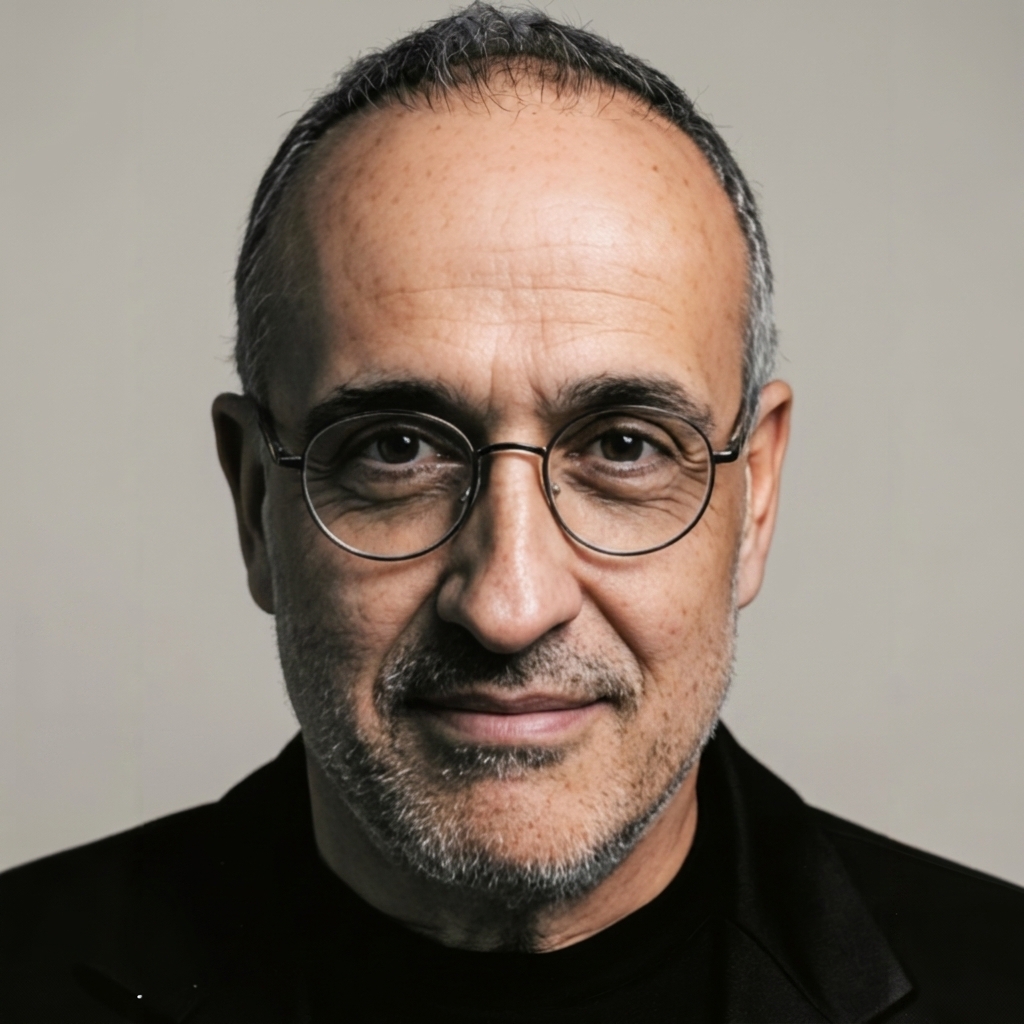
Graphic Designer, UAM, with over 20 years of experience spanning advertising agencies, in-house design departments, and high-level freelance projects. My two most relevant consecutive roles were at Alazraki Publicidad (Art Director) and at Datavision (Web Designer and Corporate Site Administrator). This has given me a comprehensive perspective: I perform well under creative pressure and understand the constant operation of an in-house department. I currently incorporate generative AI (MidJourney, Stable Diffusion) and AI agents for production and UI/UX design. I apply visual and strategic storytelling to build coherent and memorable brand narratives. I recently completed a postgraduate degree in Political and Social Studies (with honors), which strengthened my analytical and narrative-building skills. I am looking for a stable position where my experience, judgment, storytelling, and command of new technologies can be a resource for the team.
Datavision Digital
oct. 2018 - may. 2022
I joined Datavision as support for the company's Senior Designer. He made the decision to hire me after observing that my experience and performance demonstrated I could handle a significant volume of projects independently. The expectation was for me to execute and develop these projects seamlessly—in other words, to deliver high-quality results with minimal oversight from my superior. A few months later, the COVID-19 pandemic began, and with it came company-wide cuts. Management ultimately decided to retain my services, offering me the position previously held by the Senior Designer I reported to.
Unilever [Ad Libitum]
mar.2007 - jun. 2007
My involvement with a small Mexico City agency called Ad Libitum was relatively brief, and I believe the agency is no longer in operation. However, during that time, I had the opportunity to contribute to its most significant project: the editorial design for Unilever Mexico's monthly corporate magazine. As you know, Unilever is a company of major global importance. In this sense, I consider my work on their publication—though carried out through the agency—as indirect collaboration with the multinational itself. After repeated efforts by our dedicated team, we successfully consolidated the publication's editorial and visual identity for a magazine whose name, frankly, escapes me.
Publicis Arredondo de Haro
oct. 2002 - dic. 2002
I never fully understood the relationship between the in-house design "department" and the external agency, which functioned as an external studio for Publicis. This entity was called "Artimaña." The key point is that our meetings with the creatives took place in the conference room next door. I generally say I worked for Publicis, as it adds a note of prestige to my professional background. There isn't much to say about my time at the famous agency, except that I resigned after two months due to an extraordinary workload. Now, in 2025, when I compare the practices of an "advertising agency" with other experiences—like my time at Datavision—I see a clear difference between selling creative services as a product and simply offering them as part of a company's internal communications. In the first case, creativity is the product; in the second, it's just one aspect of the internal culture.
Cinépolis - [Pepsico México]
nov. 2000 - dic. 2001
A few ambitious advertising colleagues and I had the opportunity to secure the account for the prestigious exhibition company Cinépolis. This success was due in part to the slogan we proposed in our pitch materials: “La Capital del Cine” (The Capital of Cinema), which immediately won over the hearts and imaginations of the company's owners and executives. An agency was quickly formalized to provide the creative services, though it lasted little more than a moment—taking longer to set up than it did to close its doors. This is why I include the experience here as a "work" engagement, one in which I served as the sole Art Director and, later, the only creative on the project. You could almost say the service was provided as a one-man show. Incidentally, the legal entity that paid for our services was PepsiCo. In a way, the experience gave us a front-row seat to the inner workings and practices of a major multinational corporation.
Alazraki Publicidad
oct. 1997 - dic. 2000
The heyday of the great Carlos Alazraki—at least, the advertising mogul—are long gone. I can't seem to find his agency anywhere. Not at its old address, not online. All that remains are the memories and a few materials I kept from clients that were, in theory, major accounts. Among them: Uniroyal, Levi's, Sanborns, and others. These materials are primarily sketches and mock-ups for campaigns that, back then, felt like grand ideas. But as any Art Director or creative who has worked in advertising knows, those supposedly brilliant concepts are invariably "corrected" by the clients, leaving behind only mediocrity. In other words, exactly what we see everywhere today.